Last updated November 25, 2026
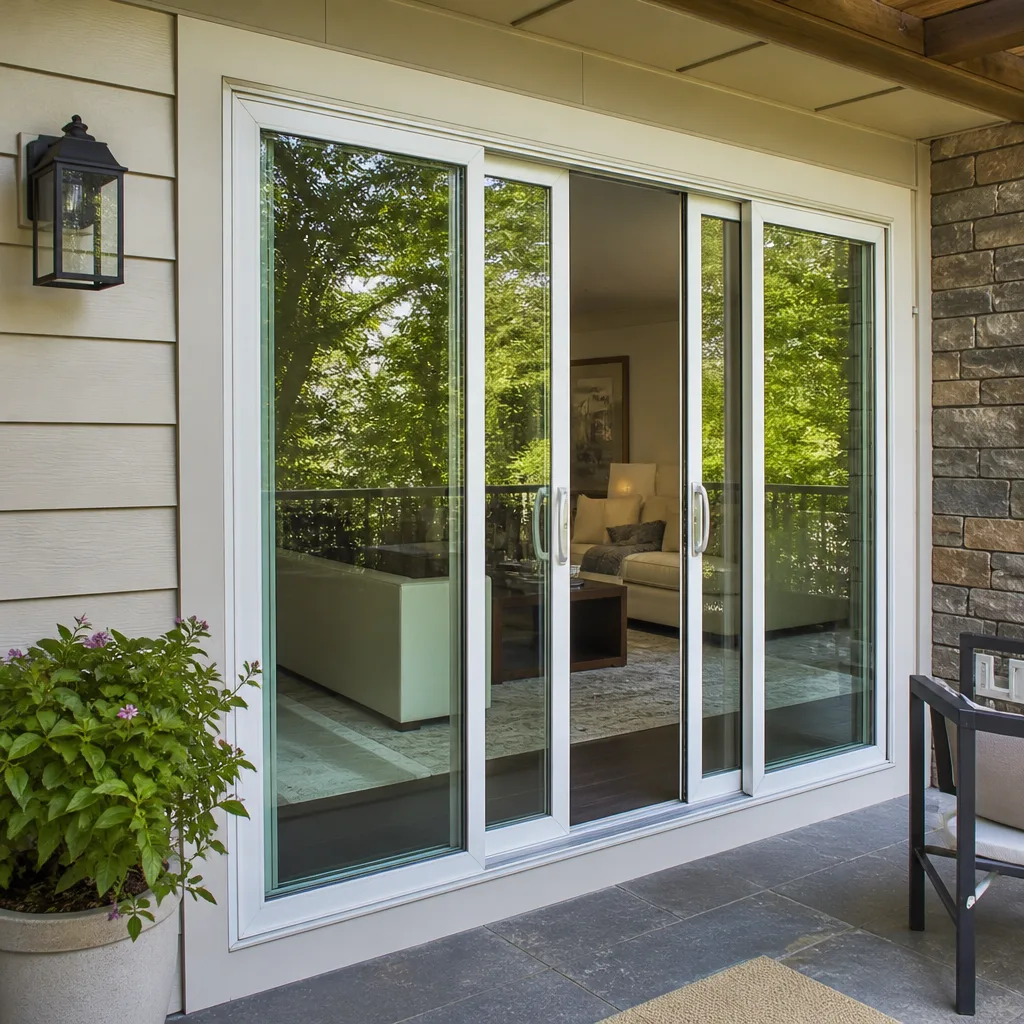 Sliding glass doors
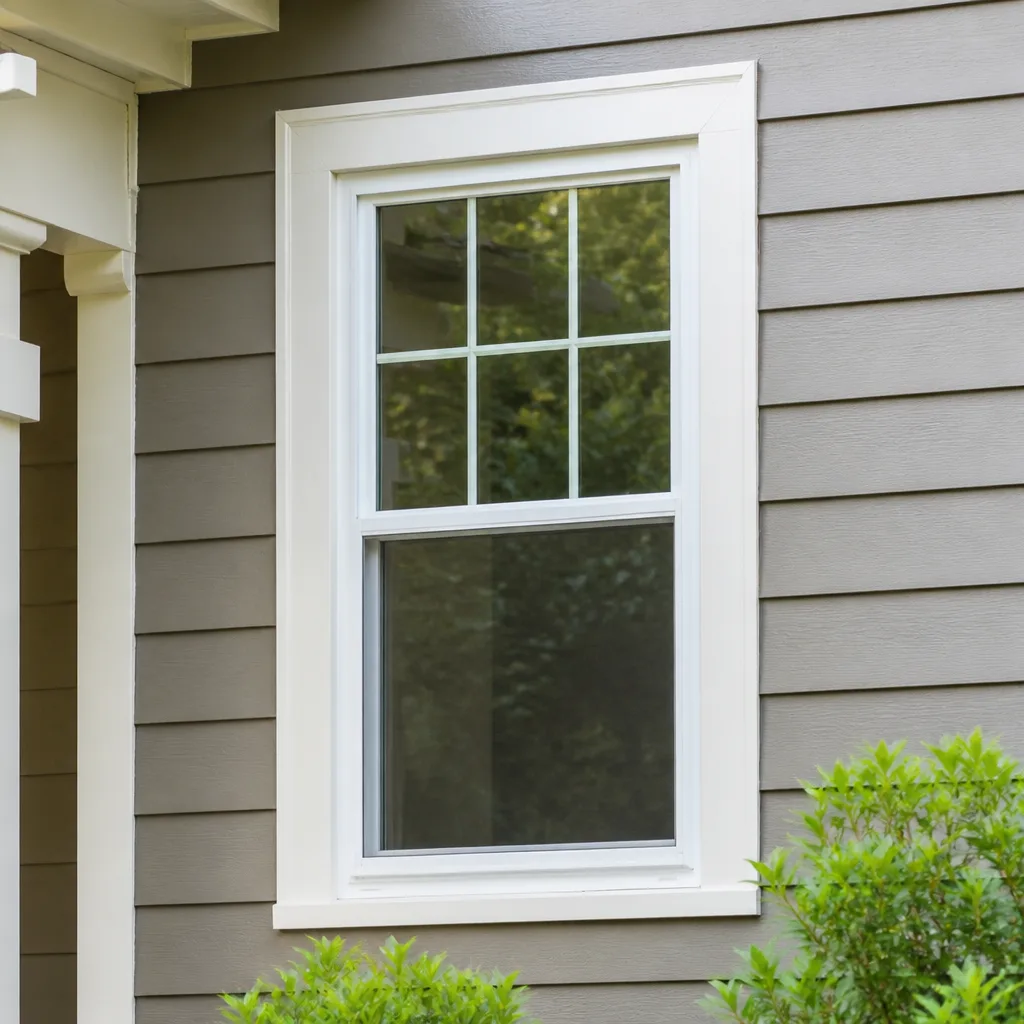 Single hung
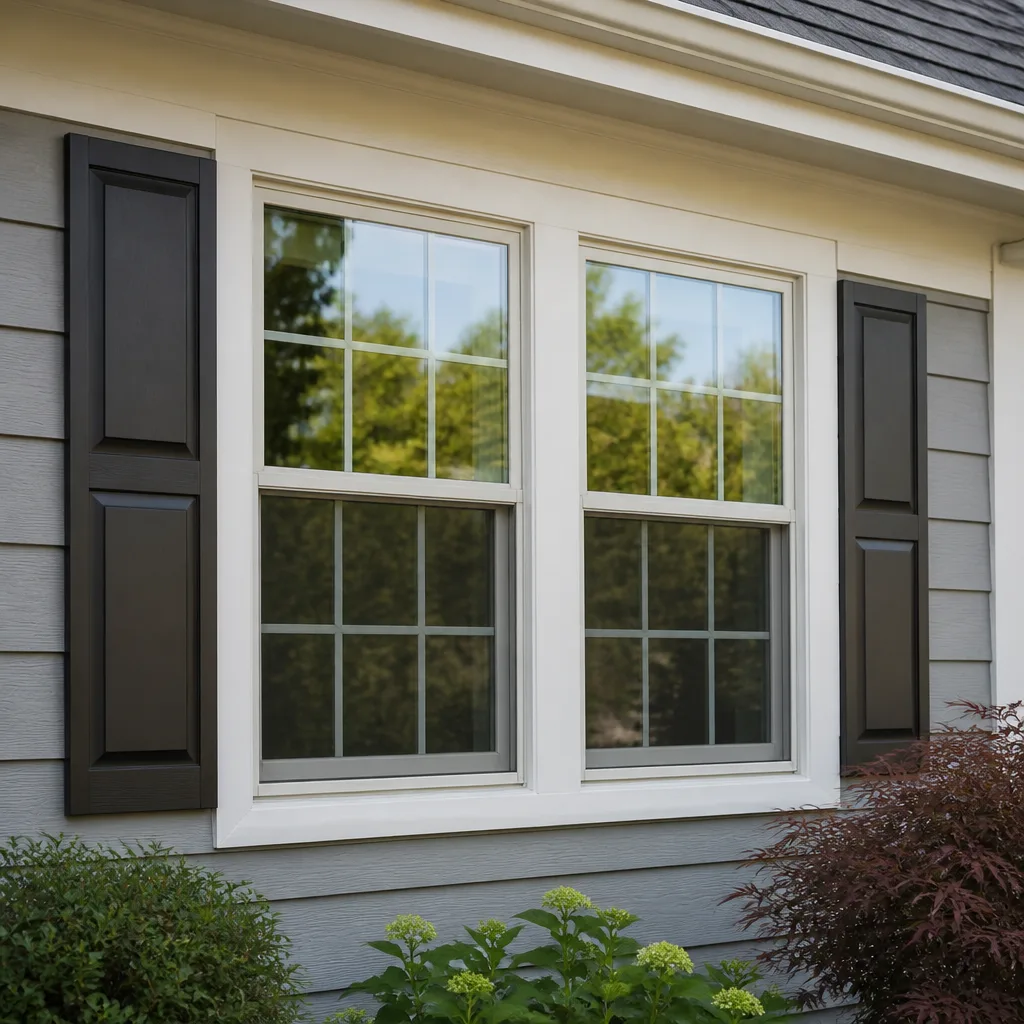 Double hung
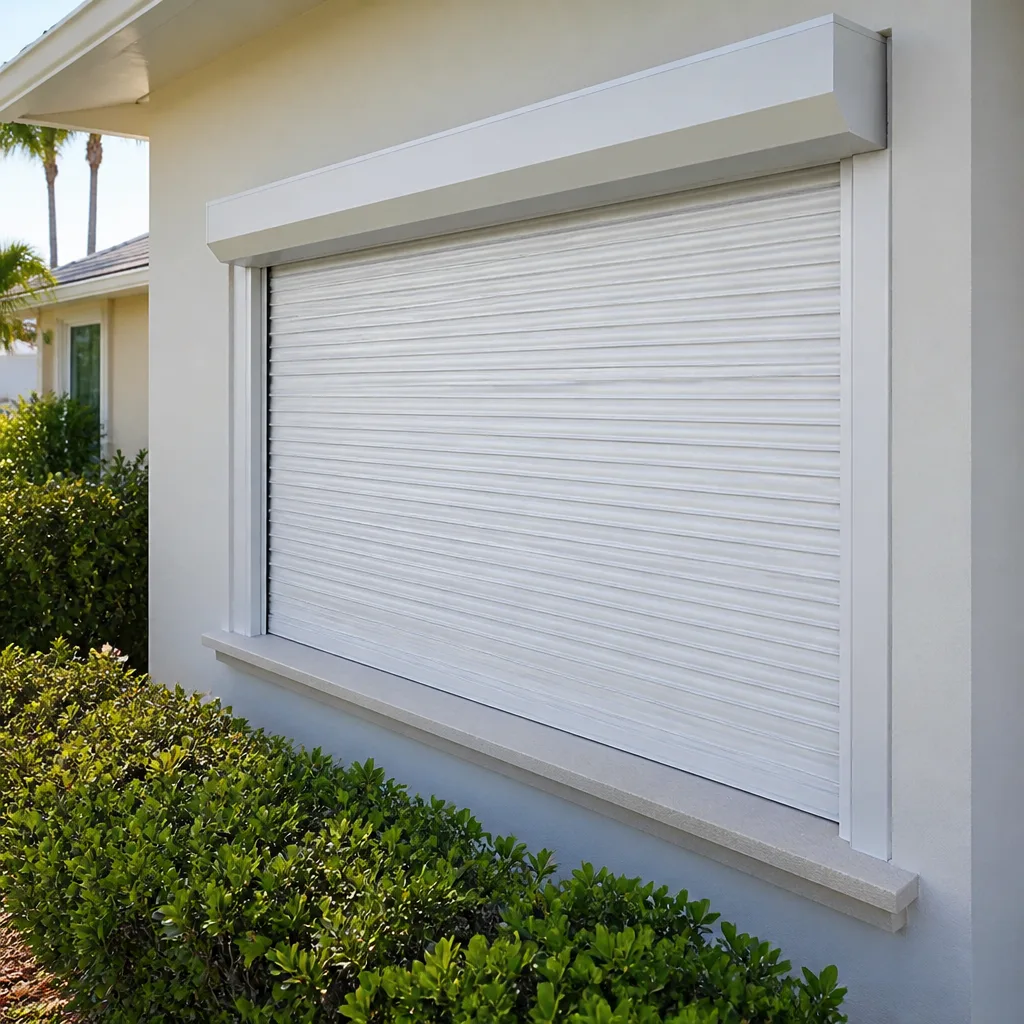 Horizontal roller
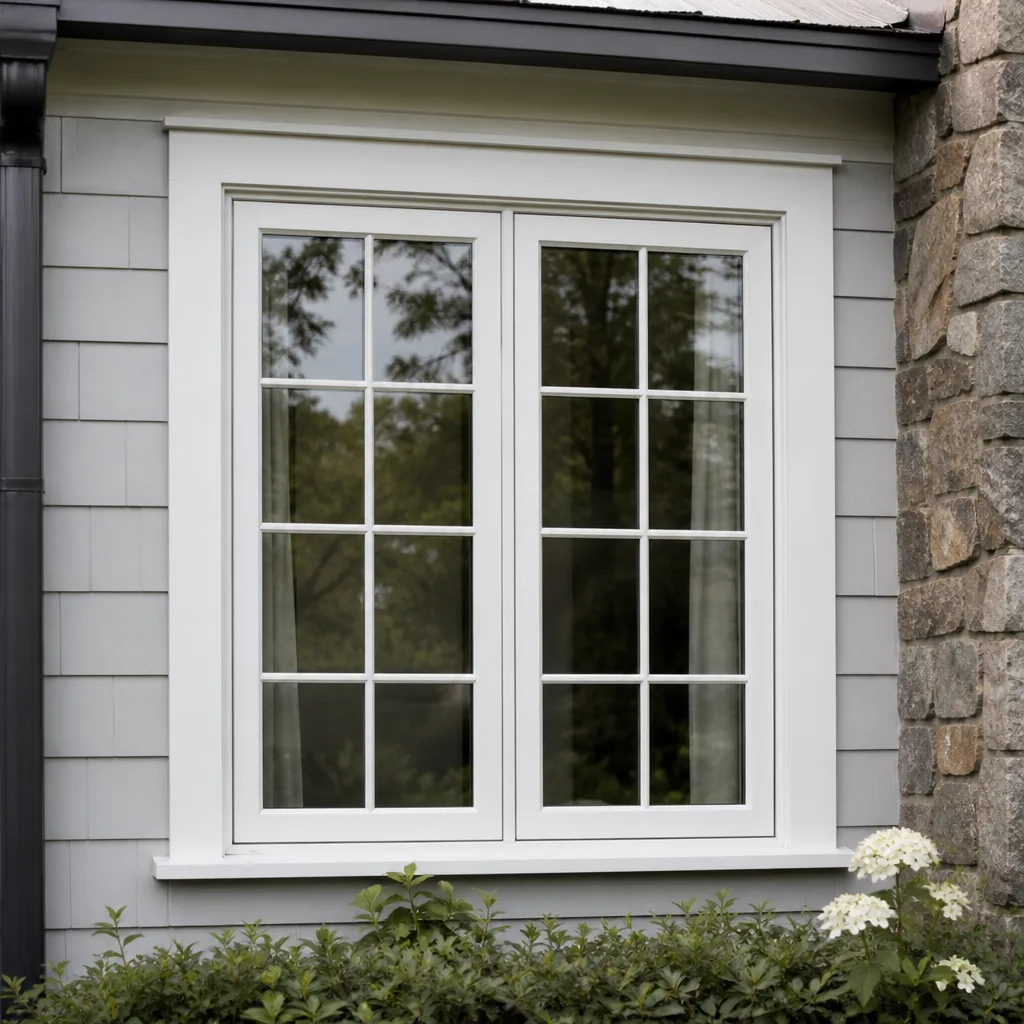 Casement
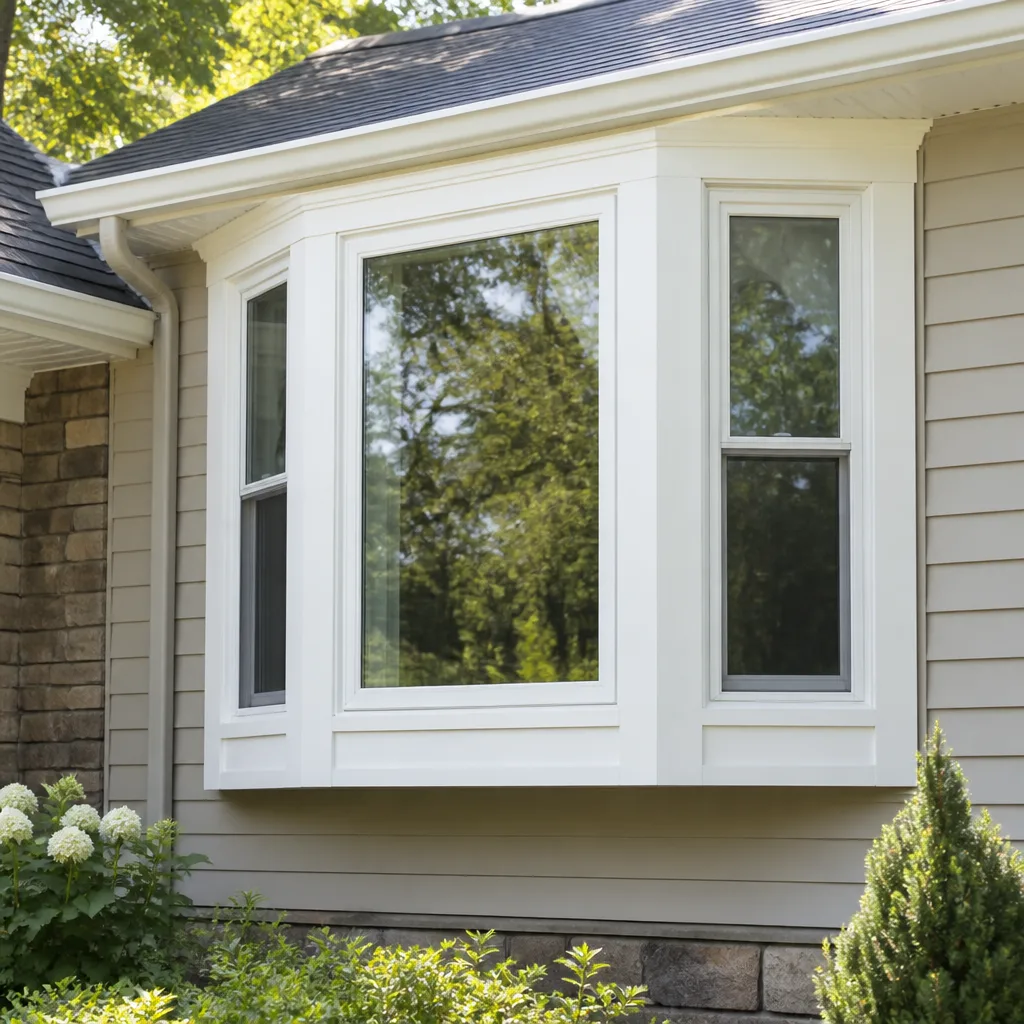 Bay & bow
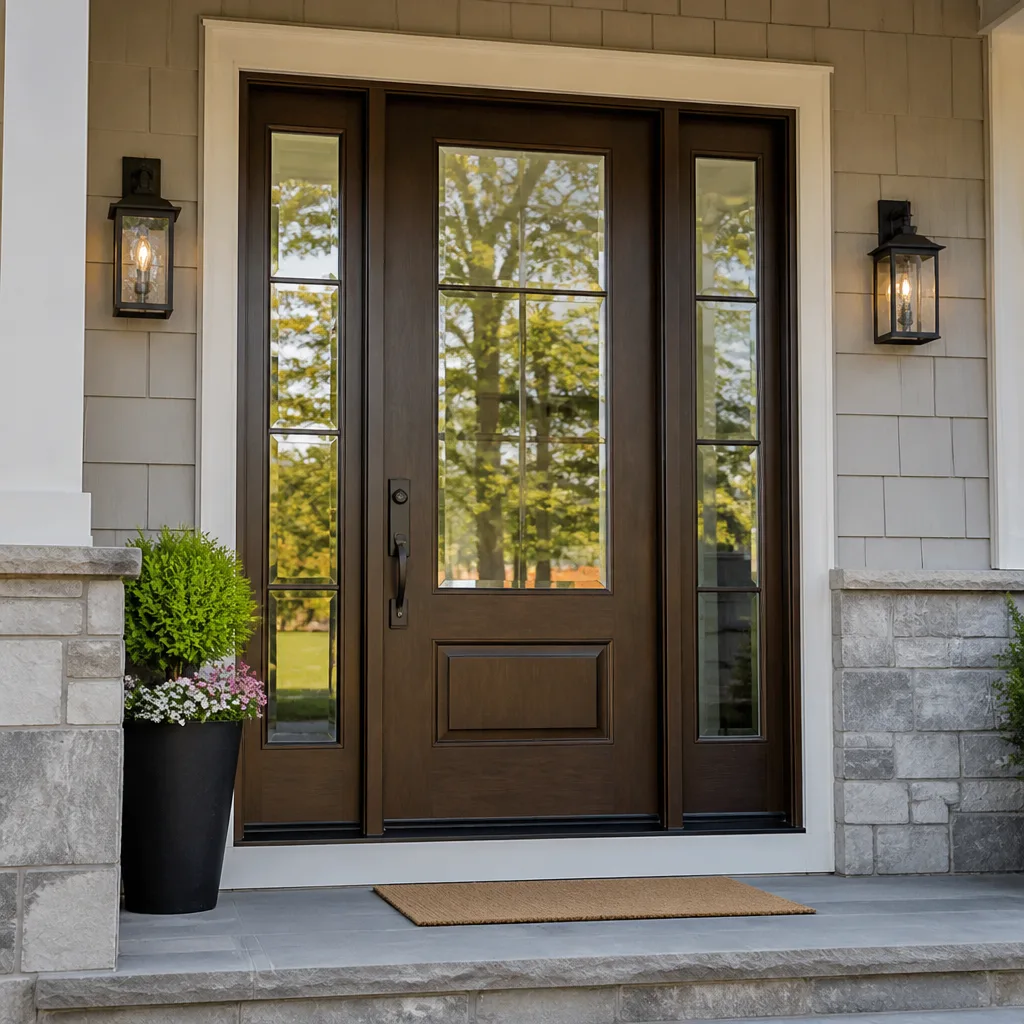 Entry doors
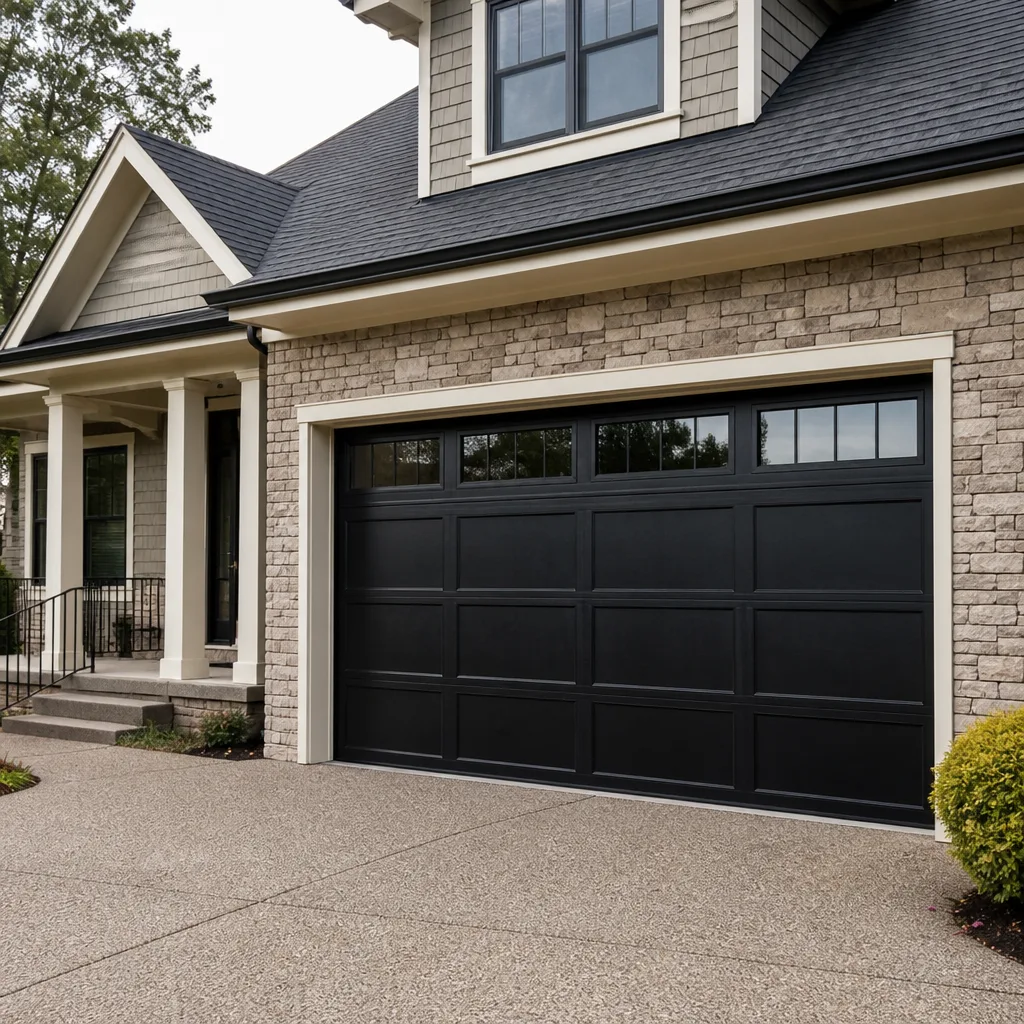 Impact garage doors
 PGT
 CGI
Free in-home measure and quote - PGT, CGI and CWS impact lines compared on your actual openings, style by style
Get your free estimateThe Complete Guide to Windows & Doors in Rancho Cordova
Here’s the counterintuitive part about window shopping: the same low-e coating on the same label can help a home in San Francisco and quietly work against a home in Rancho Cordova. Glass performance is address-specific. A west-facing wall in the Sacramento Valley takes on an afternoon sun load that a coastal building never sees, and a product tuned for mild marine weather can trap that heat inside instead of reflecting it. In this guide, we walk through what actually decides performance in Rancho Cordova: climate zone rules, frame materials in serious valley heat, wildfire smoke and ember intrusion, brand availability, and what entry points realistically cost here. You’ll finish knowing what to specify before anyone quotes you a number.
Quick Answer
Windows and doors in Rancho Cordova should be chosen for Climate Zone 3B: glazing with a low solar heat gain coefficient for hot, sunny valley summers, frames that hold up to sustained triple-digit heat, and seals and ratings that resist wildfire smoke and ember intrusion. Fiberglass or composite frames generally hold up better than vinyl in prolonged 105°F conditions, and every product needs to meet California Title 24 requirements for the specific opening it fills. In short, you’re buying to your address and your orientation, not to a national average.
Styles & brands we work with
- Single hung
- Double hung
- Horizontal roller
- Casement
- Bay & bow
- Sliding glass doors
- Entry doors
- Impact garage doors
- PGT
- CGI
Table of Contents
- Why Rancho Cordova Climate Changes Your Window Spec
- Climate Zone 3B and Title 24: What Compliant Glazing Actually Means
- Fiberglass, Composite, or Vinyl in 105°F Heat?
- Wildfire Smoke and Ember Intrusion: Which Seals and Ratings Matter
- Brand Availability: What’s Local and What’s Ordered In
- Sliding Doors and Patio Openings
- What Windows and Entry Doors Cost in Rancho Cordova
- The Replacement Process, Step by Step
Why Rancho Cordova Climate Changes Your Window Spec
Rancho Cordova sits in the Sacramento Valley, and the valley is not one climate but three seasons of stress on a window. Summer pushes into triple digits and holds there for stretches. Winter brings tule fog – dense, cold, damp air pooling over the valley floor – which is hard on seals and can leave condensation between panes if a unit’s thermal seal isn’t up to it. And in recent years, wildfire smoke has become a third seasonal factor, arriving in the warm months and settling into the valley. A window bought for a mild coastal climate is being asked to survive none of this, which is why national spec sheets can mislead.
Orientation matters more here than most homeowners expect. A west-facing wall in Rancho Cordova collects the full afternoon load; a shaded north wall barely notices summer. That means two identical windows in the same house can perform differently, and a sensible spec treats them differently. We’ve seen plenty of homes where the right answer is a different glazing package on the west side than on the north, and quoting the whole house with one glass recipe is one of the most common shortcuts in this trade.
- Summer: long, hot, high solar gain in the afternoon – especially on west and south glass.
- Winter: cold tule fog, damp air, more condensation pressure on frames and seals.
- Smoke season: particulate and ember exposure that stresses weatherstripping and door bottoms.
None of it is exotic. It’s just specific – and specifics are exactly what a national mailer skips.
Climate Zone 3B and Title 24: What Compliant Glazing Actually Means
Before you pick a frame color or a grille pattern, compliance narrows the field. Rancho Cordova falls in IECC Climate Zone 3B, the hot-dry zone of California’s building energy code. California’s Title 24 energy standards set performance limits for the whole envelope, and windows and doors are part of that calculation. In practical terms, when you replace glazing, you’re not just swapping glass – you’re changing the numbers the house is measured against.
For a homeowner, the useful translation is this: a product’s U-factor, solar heat gain coefficient (SHGC), and visible transmittance all get checked against what your project and permit require, and a compliant window in one zone can be non-compliant in another. That’s why a “great deal” imported from a retailer outside the region can be a problem at inspection time. Most cities require a permit for window replacement, so it’s worth asking your city’s building department what documentation they’ll want before work begins.
- Identify your project type (replacement within the existing opening vs. a new opening) – it changes the paperwork.
- Confirm the required performance values for your zone with your permit authority.
- Select glazing that meets or beats those values, then choose frames and styles.
- Keep the manufacturer documentation and the NFRC labels – inspectors ask for them.
Because our work is strictly windows and doors, code-compliant glazing is core work rather than a side job. When you’re ready to price it out, our window replacement Rancho Cordova page lays out the scope, and we pull the permits and see the inspections through.
Fiberglass, Composite, or Vinyl in 105°F Heat?
This is where Rancho Cordova separates itself from most of California. Vinyl is the default window frame across much of the state, and in mild climates it’s fine. In sustained 105°F heat, though, the material’s weakness shows. Vinyl’s coefficient of thermal expansion runs roughly three times that of glass – vinyl moves noticeably more per degree than the glass sealed inside it, and it’s been the go-to window frame in California for many years. Over season after season of high heat, that movement puts constant pressure on the seals at the frame edge.
Fiberglass expands and contracts at a rate much closer to glass, so the frame and the glazing move together rather than fighting each other. Composite frames are engineered to behave similarly. In a valley where a single summer can deliver weeks of extreme heat, that consistency translates into fewer seal failures and less call for re-weatherstripping.
- Fiberglass: stable in heat, low expansion relative to glass, paintable, resists warping.
- Composite: engineered material, similar thermal stability, good for a modern profile.
- Vinyl: economical, widely available, but the material most stressed by prolonged extreme heat.
- Wood clad with aluminum or fiberglass: a traditional look with a weather-resistant exterior.
None of these is universally “best.” The right answer depends on which wall the window is on, how much direct sun it takes, and how long you plan to stay. That’s the conversation we have before a quote, not after. For example, we carry PGT because its impact-rated and thermally engineered lines handle heat and storm exposure without compromising the frame – and we carry it alongside other systems so you compare rather than accept the only option offered.
Wildfire Smoke and Ember Intrusion: Which Seals and Ratings Matter
Wildfire smoke has changed what homeowners here expect from their openings. A window that’s airtight on paper can still let in fine particulate if its weatherstripping, sash seals, and operable joints aren’t well designed. The question isn’t whether the glass blocks smoke – most do – but whether the whole assembly, frame and seal included, closes tight and stays tight through heat cycles. Ember intrusion at the opening is the other concern: wind-blown embers finding gaps around door bottoms, thresholds, and glazing perimeters.
There are practical answers. Look for:
- Continuous, compression-type weatherstripping on operable windows rather than the bargain adhesive strips that fail in heat.
- Doors with a proper threshold seal and adjustable door bottom, not just a sweep.
- Impact-rated systems, where the rating includes both the glazing and its mounting and sealing.
- Frames that hold their shape in heat, so seals stay in contact with the sash.
We carry CGI because its impact-rated products are engineered to strict wind-load and Miami-Dade standards, and that same engineering carries over to how the whole unit is built and sealed. If your home faces a slope, an open lot, or a canyon edge, that build quality is worth the ask before you commit. Smoke and ember resilience isn’t a single product – it’s the seal quality of every opening in the house.
Brand Availability: What’s Local and What’s Ordered In
Two windows that look identical on a showroom card can have very different lead times and warranty service depending on whether the manufacturer’s products are stocked in the region or ordered and shipped in from out of state. This matters in Rancho Cordova because when a window or door is damaged or a part is needed, response time depends on how the product got here in the first place. In our experience, a specialized local product that’s locally supported is easier to service than a bargain model freighted from across the country.
Our portfolio runs across eight recognized industry brands, which lets us put real alternatives side by side instead of pushing a single house brand:
- PGT: impact-rated and thermally engineered lines for storm and heat performance.
- CGI: impact-rated products engineered to strict wind-load and Miami-Dade standards.
- CWS: a range of replacement and new-construction window systems.
- ES Windows and ECO Window Systems: energy-performance-focused lines, useful when efficiency is the priority and you want to compare specs directly.
- Mr-Glass and ViewLux: additional glazing and window options for different budgets and styles.
- Therma-Tru: fiberglass entry doors – the benchmark brand in that category, and a natural fit for a front door exposed to valley heat.
Availability is a real sorting tool. Ask, for any specific product, whether it’s stocked in the region or custom-ordered, what the lead time looks like, and how warranty service is handled. When lead times matter, our window installation team can tell you what’s realistic for the specific opening before you sign. Compare your options before you decide – that’s the whole reason we carry more than one.
Sliding Doors and Patio Openings
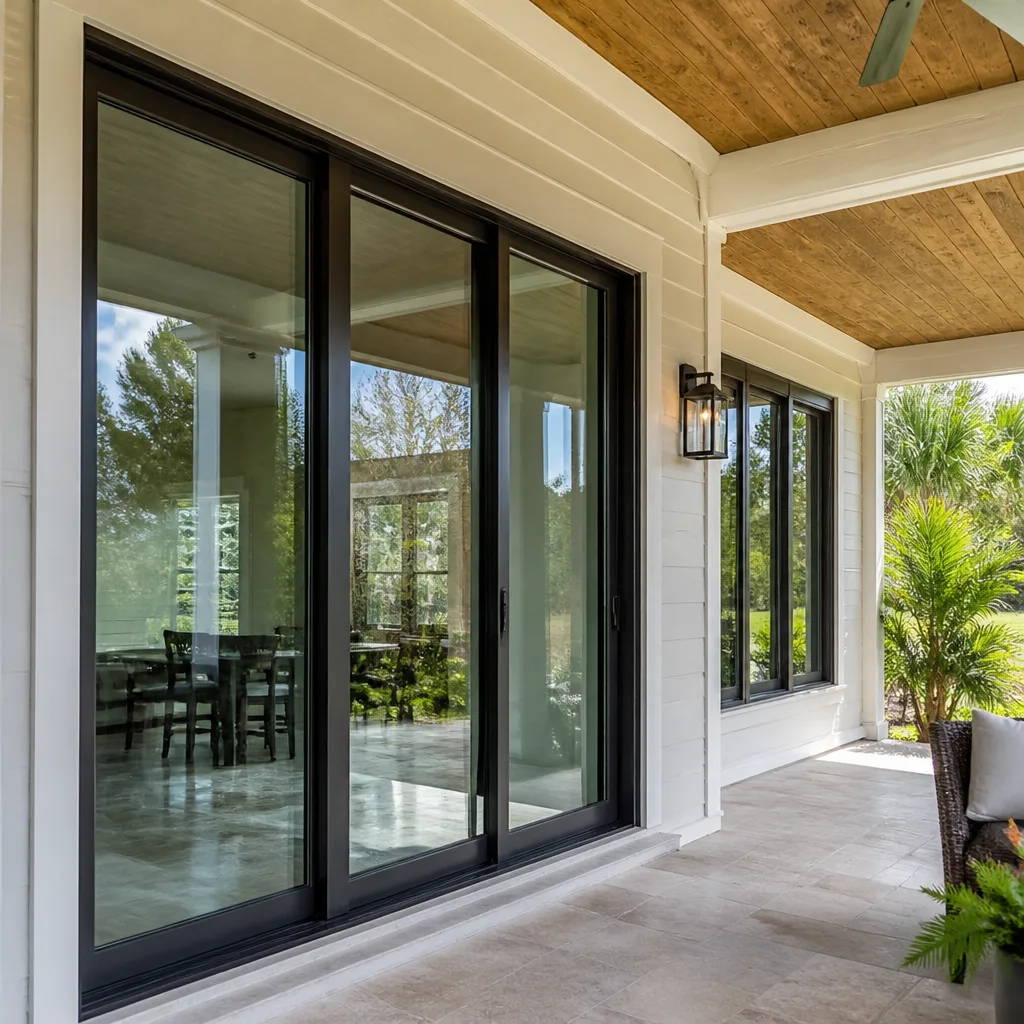
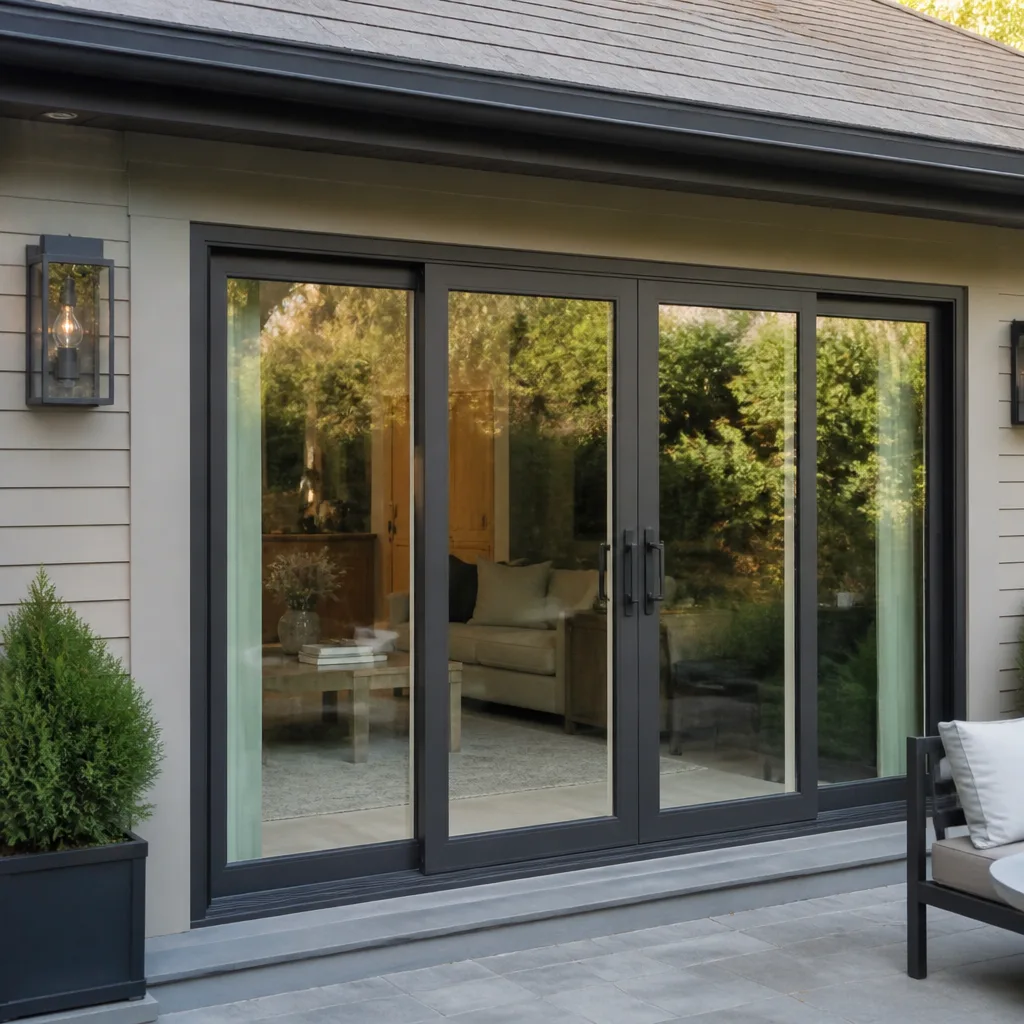
In this climate, patio access isn’t a luxury, it’s the main living feature of a lot of homes – which is why we treat sliding door replacement as a dedicated service rather than an add-on. A sliding glass door is the largest heavy-mover in the house: big panel, big seal, big consequence if it’s specified wrong. In Rancho Cordova heat, a sliding door with a weak thermal break and poor weatherstripping can become the biggest energy and seal failure point in the envelope.
What to look for on a patio opening:
- Thermal break in the frame: keeps heat transfer through the metal manageable.
- Roller and track quality: a heavy panel that binds needs a track system built for the load, not a friction glide.
- Positive-locking and adjustable bottom seals: better for both weather and ember resistance.
- Glazing consistent with Title 24: a patio door is a big piece of glass and counts heavily in the energy calculation.
A sliding door replacement is a full-unit job: the door, the frame, the seal, and the hardware. Replace the glass in a tired old slider and you still have a tired frame and track. If you want the whole opening handled as a unit, that’s the conversation to have early. Our door replacement service covers both entry doors and sliders, so there’s no hand-off to a separate crew.
What Windows and Entry Doors Cost in Rancho Cordova
Here’s the honest answer: pricing for windows and doors in Rancho Cordova is driven by local contractor labor rates and local material sourcing, not by the national averages a lot of quote sites publish. The ranges below are typical estimates to help you budget, and they’re the kind of numbers we see locally. Every one is an estimate; the written, line-item quote sets the final price. We take window and door jobs of three openings or more, so the smallest project we quote is a three-window replacement.
| Project | Typical estimated range (Rancho Cordova) |
|---|---|
| Replacement window, standard vinyl, per opening | Roughly $550 – $1,100 |
| Replacement window, fiberglass or composite, per opening | Roughly $900 – $1,700 |
| Impact-rated window, per opening | Roughly $1,100 – $2,200 |
| Sliding door replacement, per unit | Roughly $1,800 – $4,200 |
| Fiberglass entry door replacement | Roughly $1,500 – $3,500 |
| Designer or premium entry door | Roughly $3,000 – $6,500 |
What moves a price up or down: the size of the opening, whether it’s replacement within the existing frame or a new opening, the glazing package required for compliance, and the finish and hardware. A three-window job at the low end usually means simple vinyl replacement windows; the same count in fiberglass with impact glazing lands toward the upper end. The one number we never quote blind is the whole-house price – it comes from walking the openings and writing down the orientation of each one.
When you’re ready, call (279) 321-4428 for a free estimate and a written line-item quote. Prices are fixed to that quote with no change orders, and we pull the permits and pass the inspections.
The Replacement Process, Step by Step
What a window or door replacement looks like from the homeowner’s side, in order:
- Walk the openings. We note size, orientation, frame condition, and how each opening is used. A north kitchen window and a west living room window get different recommendations.
- Specify products. We match glazing to zone requirements, frame material to exposure, and style to the house. You see the options and the trade-offs in writing.
- Confirm permits and inspection requirements. Most cities require a permit for window replacement, so we handle the paperwork before the schedule is set.
- Scheduling and material lead time. Stocked products move faster than custom orders; lead time is confirmed per product, not promised as a blanket date.
- Installation. Old units are removed, openings prepped, new units set, sealed, and finished. Flashing and sealant on the exterior decide how much of the window’s performance you actually get.
- Inspection and walkthrough. The work is checked against the permit, and you review operation, locking, and finish on every opening.
The part people underestimate is step five’s sealant and flashing work. A great window bedded badly is a leaker. That’s why our technicians do the fitting and sealing themselves, and why we limit our scope to windows and doors – every installation is core work.
Common Mistakes to Avoid
- Buying to a national spec. A glazing package tuned for a coastal city can trap heat in a valley home facing west. Match the spec to Climate Zone 3B and to each wall’s orientation, not to a catalog standard.
- Assuming vinyl is always the default. Vinyl is economical and fine for shaded openings, but in sustained 105°F heat its expansion relative to glass puts real pressure on seals. Consider fiberglass or composite on exposed walls.
- Skipping the Title 24 check until inspection. Confirm the required performance values before you buy. Most cities require a permit for window replacement, so non-compliant units can stall the whole job.
- Choosing a brand by sticker price alone. Ask whether the product is stocked in the region or custom-ordered, and how warranty service is handled. A cheap window freighted from out of state can be hard to service later.
- Replacing glass in a failing sliding door. The frame, track, and seal are usually what’s failing on an older slider in Rancho Cordova heat. Replace the unit as a whole rather than the glass alone.
- Ignoring seal quality on doors. Ember and smoke intrusion is a seal problem, not just a glass problem. A door with no threshold seal or adjustable bottom lets fine material and wind-blown embers past.
- Quoting a whole house off one showroom window. Two identical windows in one house can need different glazing. Walk every opening and note its orientation before you commit to a spec.
See the difference
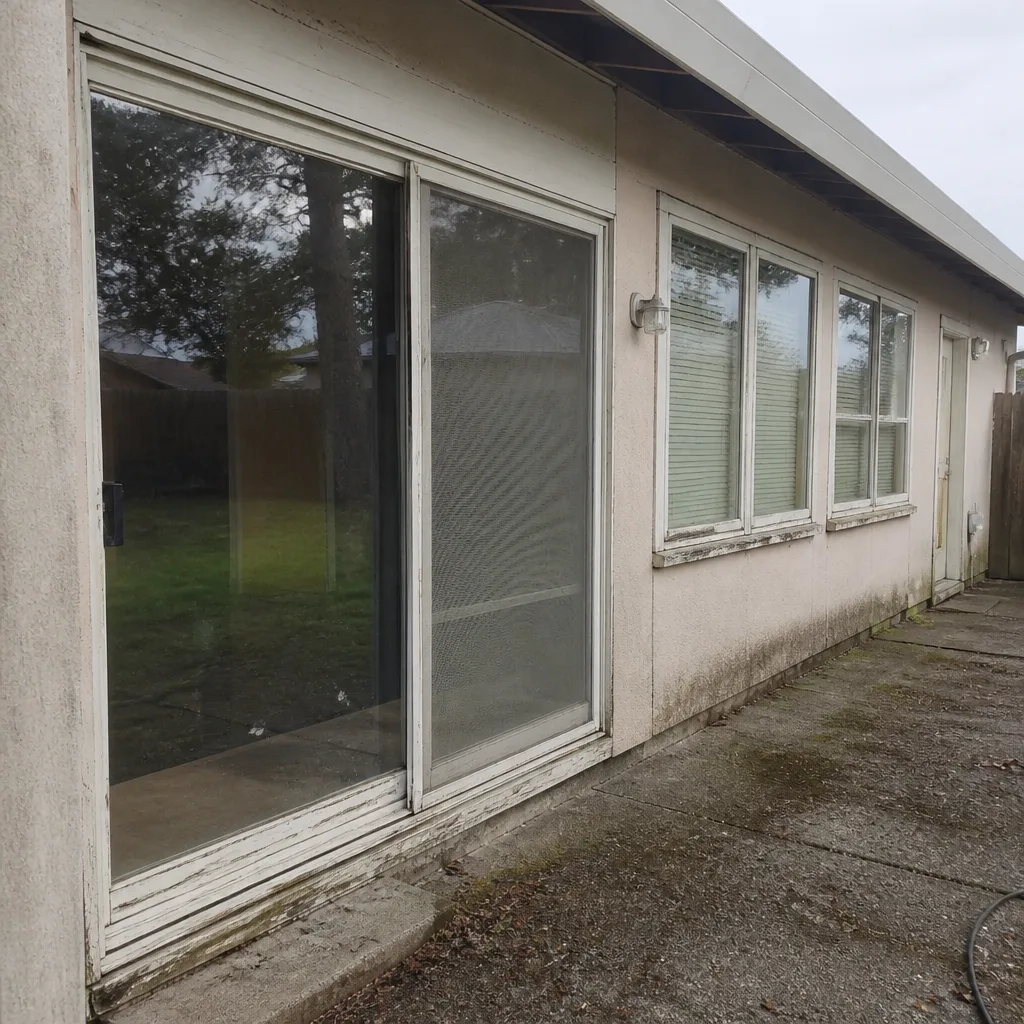 Before
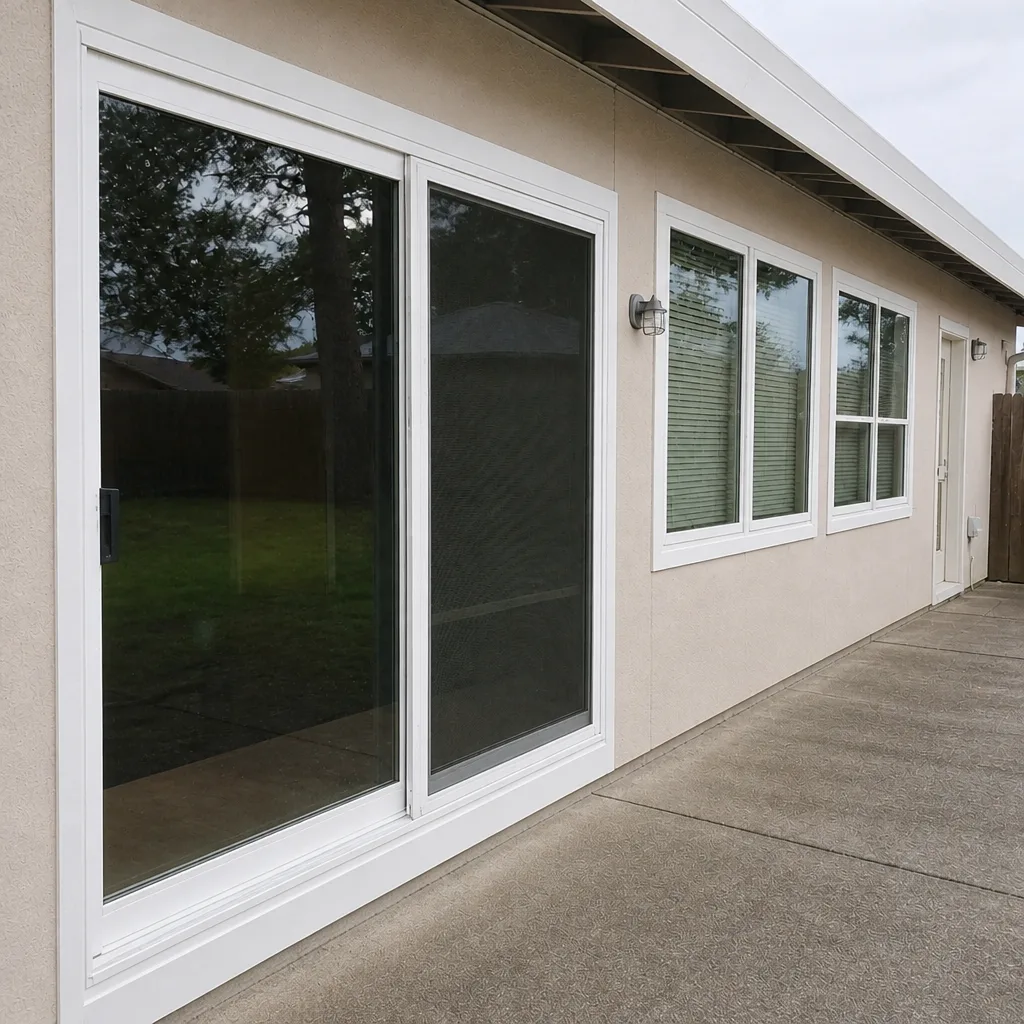 After
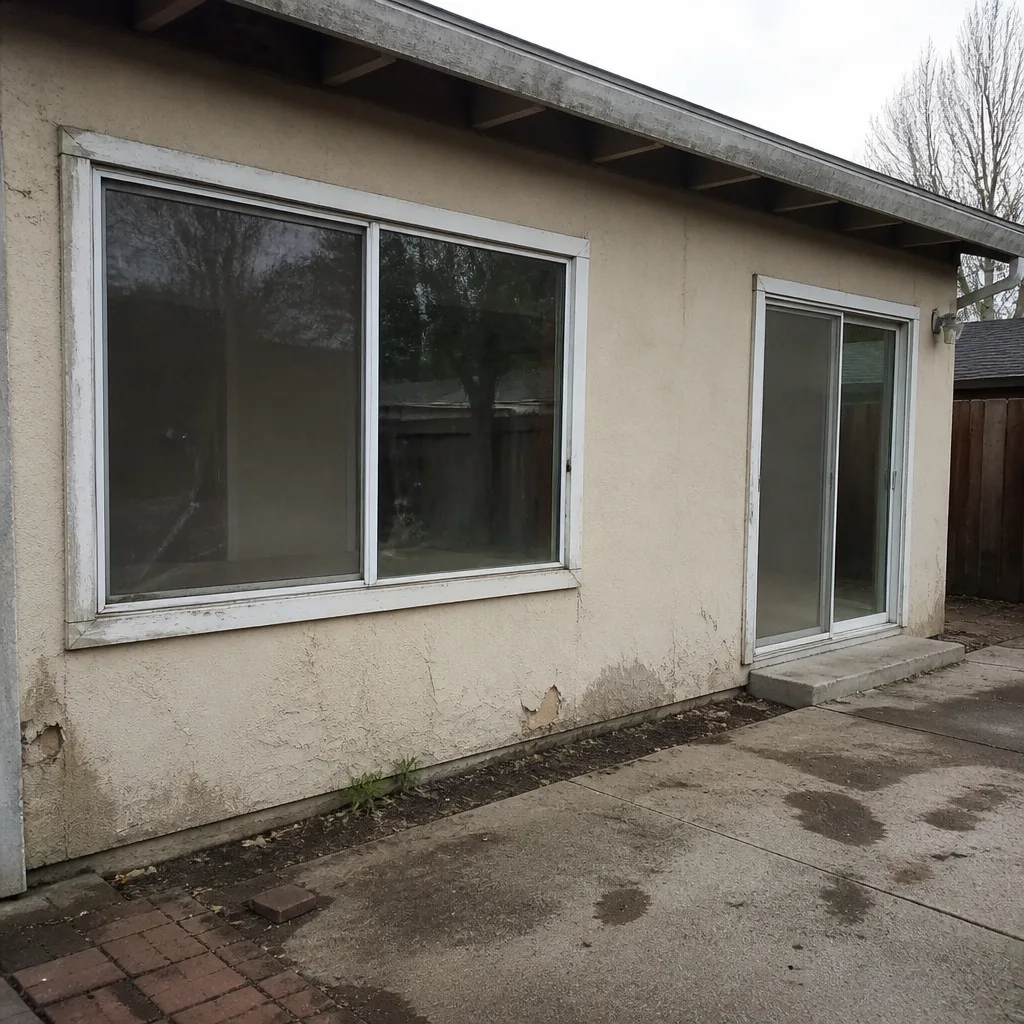 Before
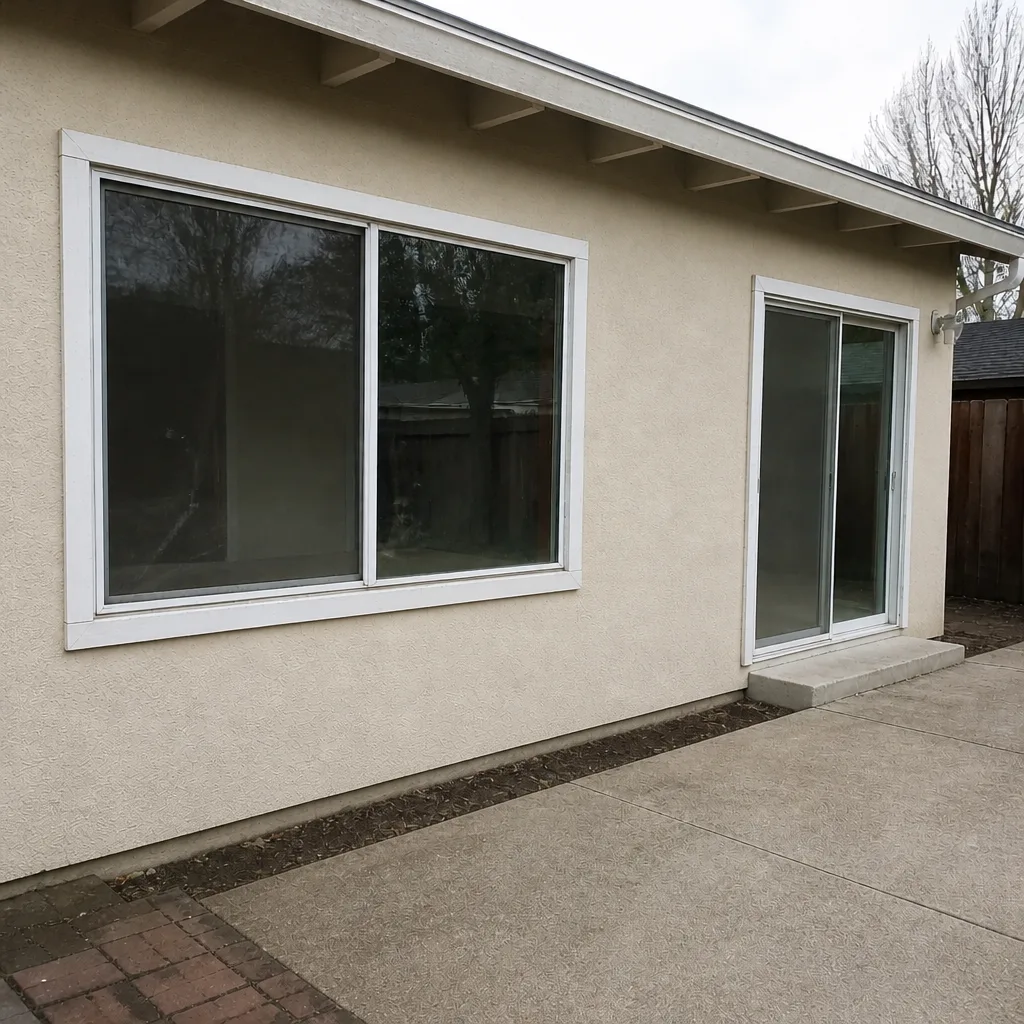 After
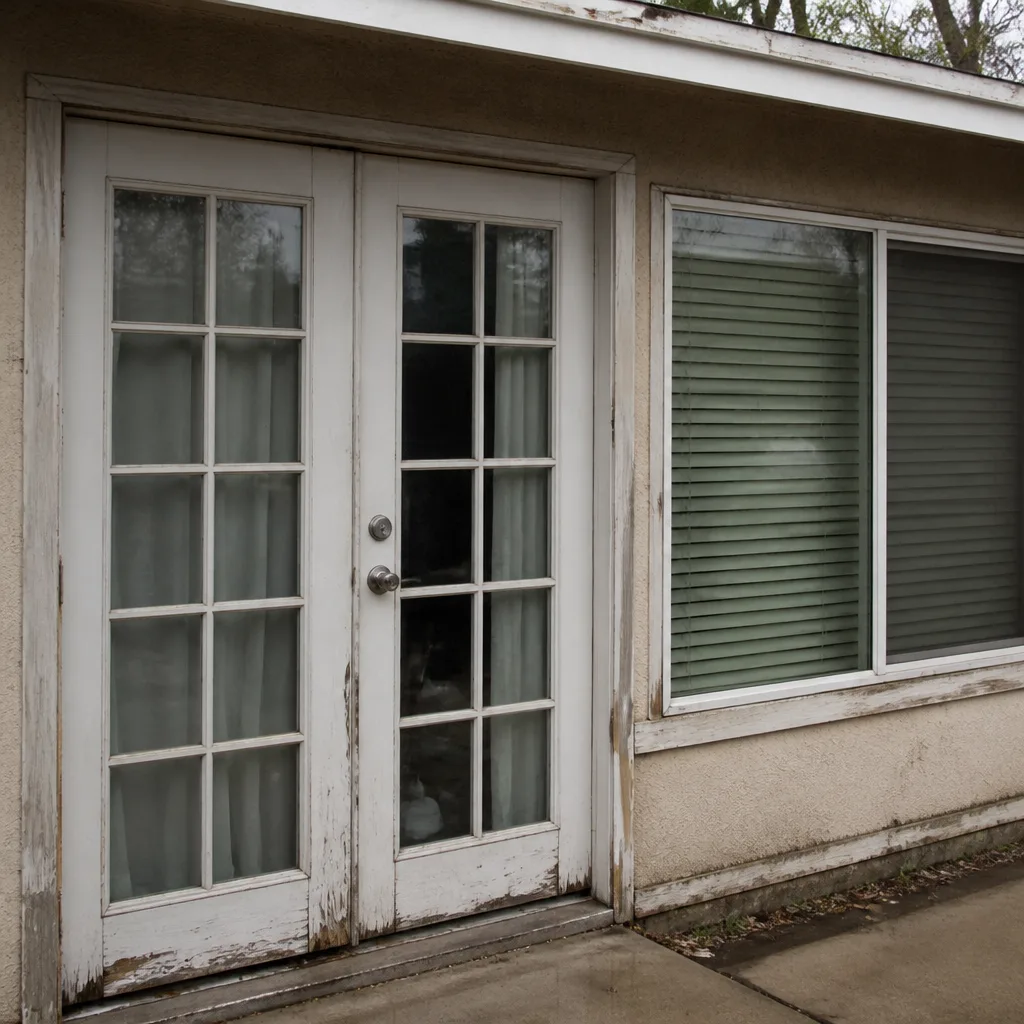 Before
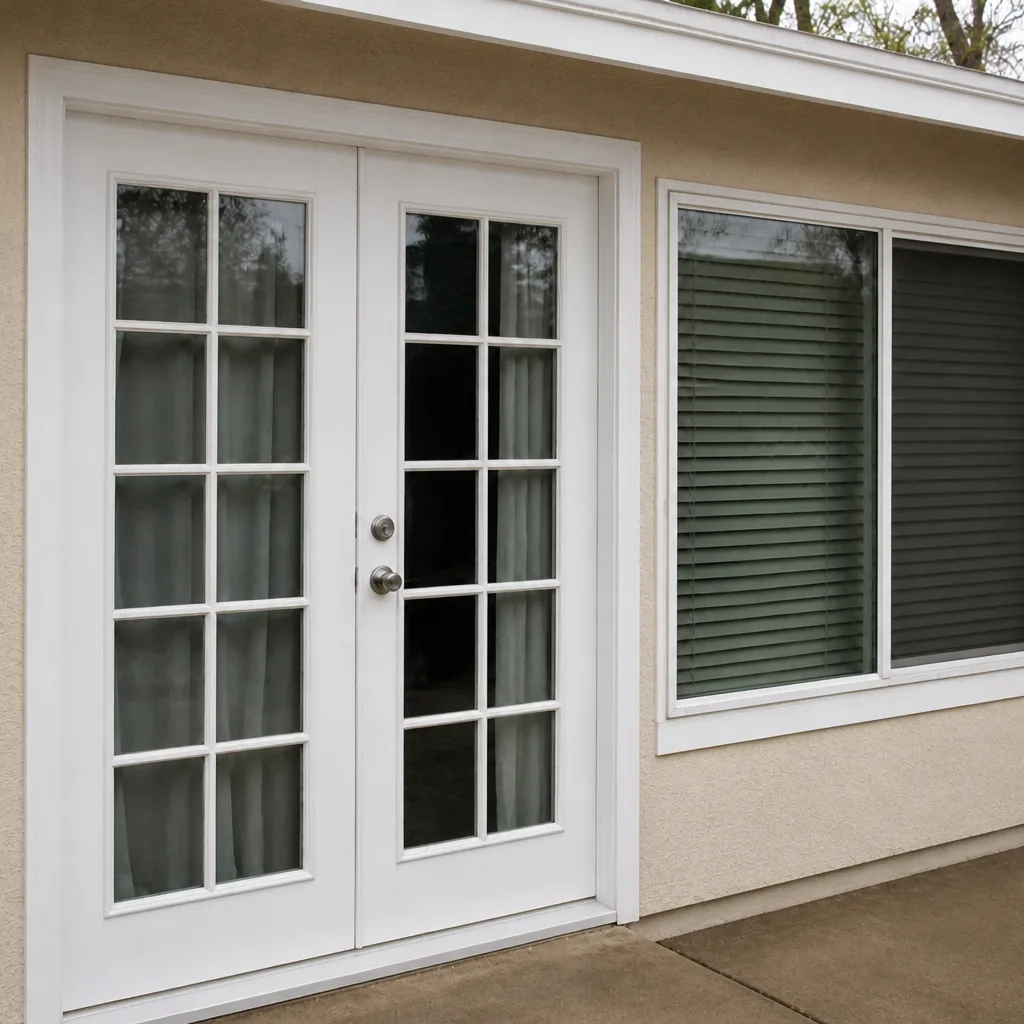 After
When to Call a Professional
Windows and doors aren’t a do-it-yourself project once the opening is involved. Call a professional if you’re seeing condensation between panes (that points to a failed seal and usually means replacement), if frames are warped or drafts are consistent, if a sliding door binds or leaks at the threshold, or if your entry door no longer seals. Call us too if you’re planning a whole-house replacement and need the products specified against Climate Zone 3B and Title 24 before you buy. Window Replacement Rancho Cordova offers free estimates in Rancho Cordova – call (279) 321-4428. The local professionals we connect you with are licensed and insured as their state requires, and our technicians have up to 13 years of experience.
Frequently Asked Questions
Windows built for Climate Zone 3B with low solar heat gain glazing and frames that hold up to sustained heat: fiberglass or composite on the sun-exposed walls, glazing that meets Title 24 requirements for the opening, and seals that stay in contact through heat cycles. The best window is the one specified for the wall it goes in – which is why we look at orientation before recommending a product. Call (279) 321-4428 for an exact quote.
Not bad, just stressed. Vinyl’s coefficient of thermal expansion runs roughly three times that of glass, so in prolonged 105°F heat the frame moves more than the glazing it holds, which puts strain on the seals at the frame edge. Vinyl can be the right economical answer for shaded openings; on exposed walls, fiberglass or composite usually holds its shape better. We’ll tell you which walls warrant the upgrade.
Most cities require a permit for window replacement, so ask your city’s building department what your project requires before work starts. A permit usually comes with a Title 24 compliance check, which is why the glazing values have to be right the first time. We pull the permits and see the inspections through, so you’re not chasing paperwork after the window goes in.
Through the seals, not the glass. Smoke and embers find gaps at operable window sashes, door bottoms, and glazing perimeters when weatherstripping is worn or the frame has moved out of contact. Look for compression-type weatherstripping, adjustable door bottoms, proper threshold seals, and impact-rated assemblies where the sealing is part of the rating. If your seals are failing in Rancho Cordova, our door replacement and window work covers the whole opening. Call (279) 321-4428 for a free estimate.
We carry PGT, CGI, CWS, ES Windows, ECO Window Systems, Mr-Glass, Therma-Tru, and ViewLux, which lets you compare products rather than accept one house brand. Lead time depends on whether a specific product is stocked in the region or custom-ordered, so ask that question per product before you commit. We’ll tell you what’s realistic for your openings.
A standard replacement window job of a few openings is typically a day or two of on-site work, once materials are in hand; entry doors and sliding doors take longer per unit. Lead time for materials, permits, and inspection is usually the bigger variable in Rancho Cordova, which is why we confirm both before the schedule is set. Call (279) 321-4428 for an exact estimate on your project.
The Bottom Line
Buying windows and doors in Rancho Cordova comes down to a few decisions that actually matter: specify glazing for Climate Zone 3B and Title 24, choose frame materials that hold up to sustained valley heat (fiberglass and composite on exposed walls), insist on seal quality that stands up to smoke and ember seasons, and ask about real availability and lead times before you sign. Then get a written line-item quote so the final price is decided up front. Windows and doors only – it’s all we do – and every installation is core work. Call (279) 321-4428 for a free estimate.
Written by the team at Window Replacement Rancho Cordova.